
Pickleball paddles are the most important piece of equipment in the game. The right paddle can improve control, power, comfort, and consistency, while the wrong one can slow your progress or even cause arm strain.
This guide is designed to help you understand pickleball paddles at a high level. Whether you are new to the sport or upgrading your gear, this page will walk you through paddle types, materials, weights, and how to choose the right one for your playing style.
You will also find links to detailed guides and reviews that go deeper into specific paddle categories.
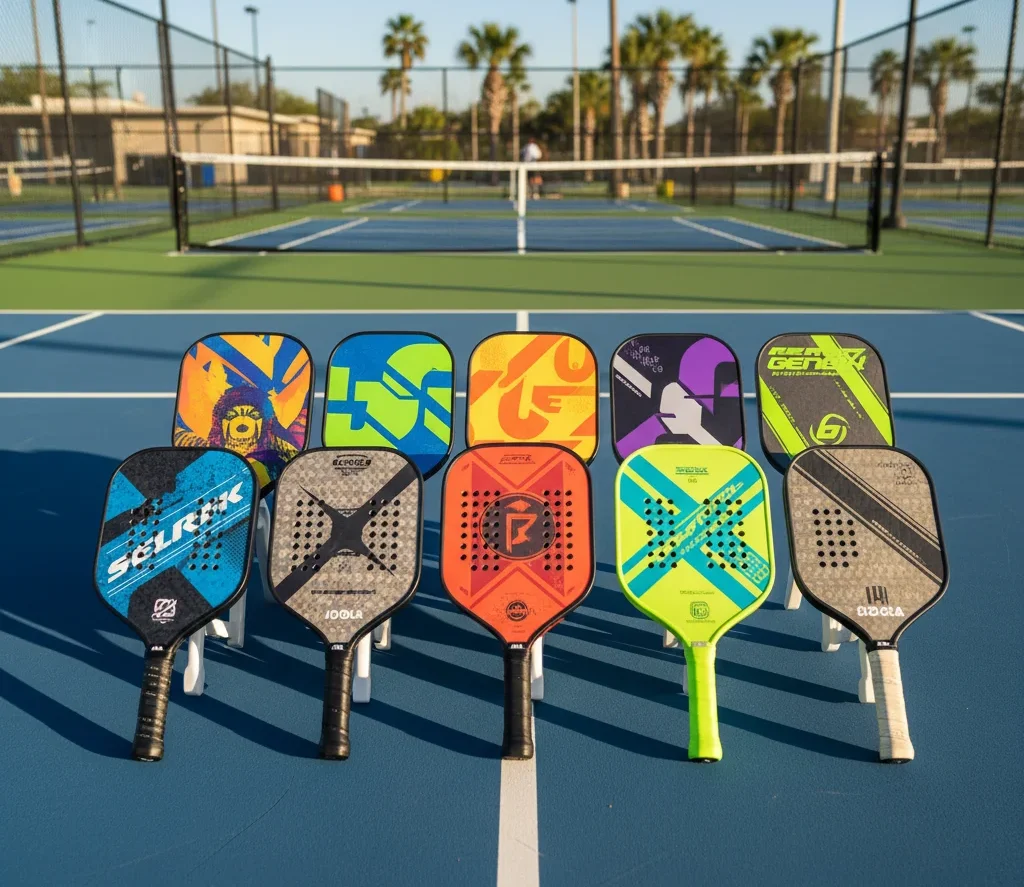
Table of Contents
What Is a Pickleball Paddle?
A pickleball paddle is a solid-faced paddle used to hit a perforated plastic ball. Unlike tennis rackets, pickleball paddles have no strings. Instead, they use composite or wooden surfaces bonded to a core material.
Modern paddles are designed to balance:
- Power
- Control
- Spin
- Comfort
Choosing the right paddle depends on skill level, physical strength, and how you like to play.
Types of Pickleball Paddles
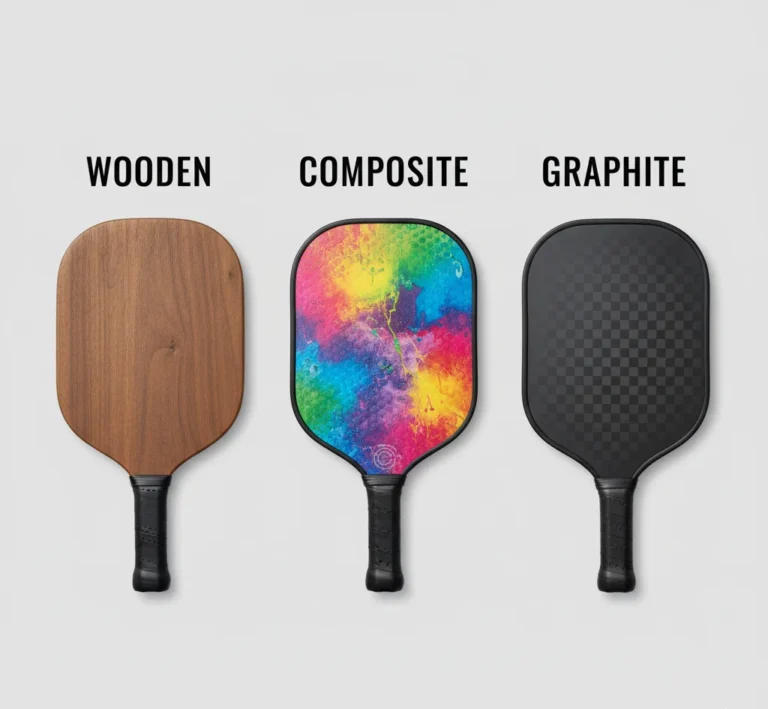
Pickleball paddles come in several main types based on materials and performance characteristics.
- Wooden Pickleball Paddles
- Composite Pickleball Paddles
- Graphite Pickleball Paddles
Wooden Pickleball Paddles
Wooden paddles are durable and affordable. They are heavier and provide less touch, but they are good for beginners who want to try the sport without spending much.
Best for:
- Schools and clubs
- Beginners
- Casual play
Composite Pickleball Paddles
Composite paddles use fiberglass or carbon surfaces with a polymer core. These paddles offer a balance of control and power and are the most popular choice today.
Best for:
- Intermediate players
- Players who want control with moderate power
Graphite Pickleball Paddles
Graphite paddles are lightweight and responsive. They provide excellent control and fast reaction at the net.
Best for:
- Advanced players
- Players who value precision and touch
Pickleball Paddle Weight Explained
Weight has a major impact on performance and comfort.
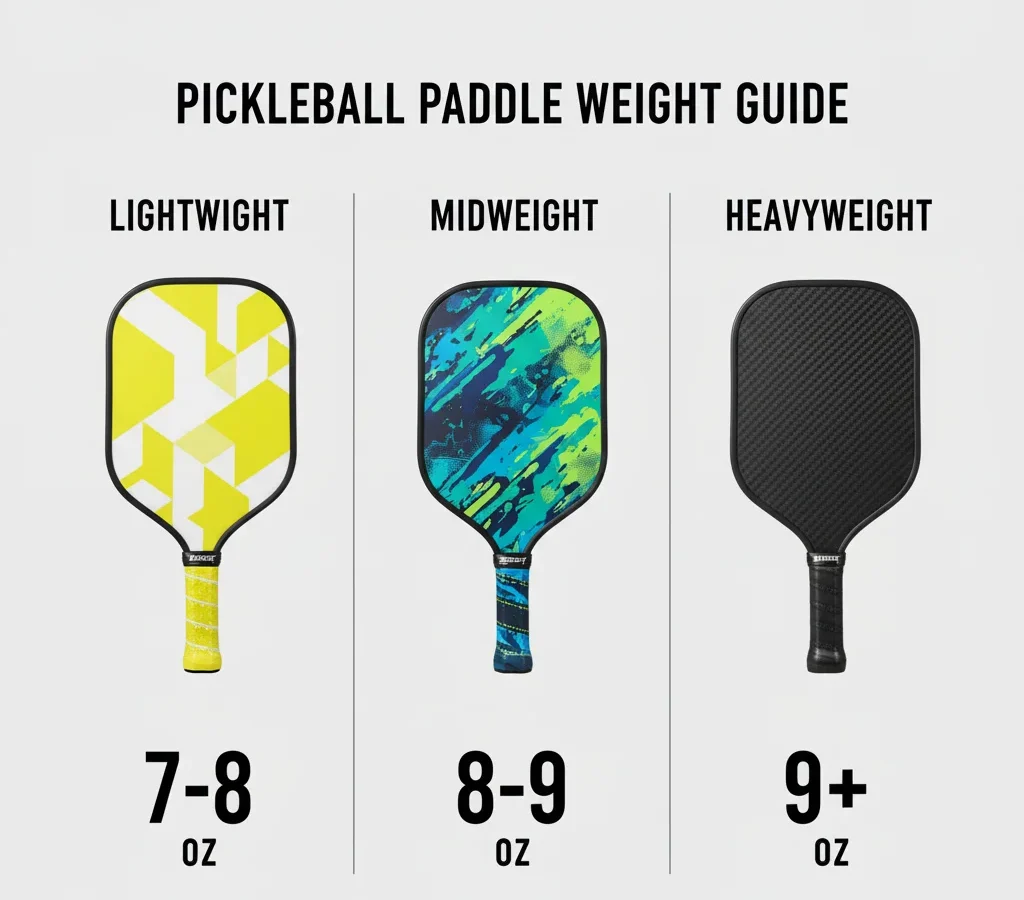
Lightweight Paddles (Best for Control & Seniors)
- Easier to maneuver
- Better for control and quick hands
- Less power
-
7-8 oz or less
Midweight Paddles (Best for Most Players)
- Balanced control and power
- Most popular range
- Ideal for most players
- 8 to 9 oz
Heavyweight Paddles (Best for Power Players)
- more power on shots
- more strain on arm and wrist
- suited for strong players
- 9 oz or more
Paddle Shape and Size Differences
Paddles vary in length and width.
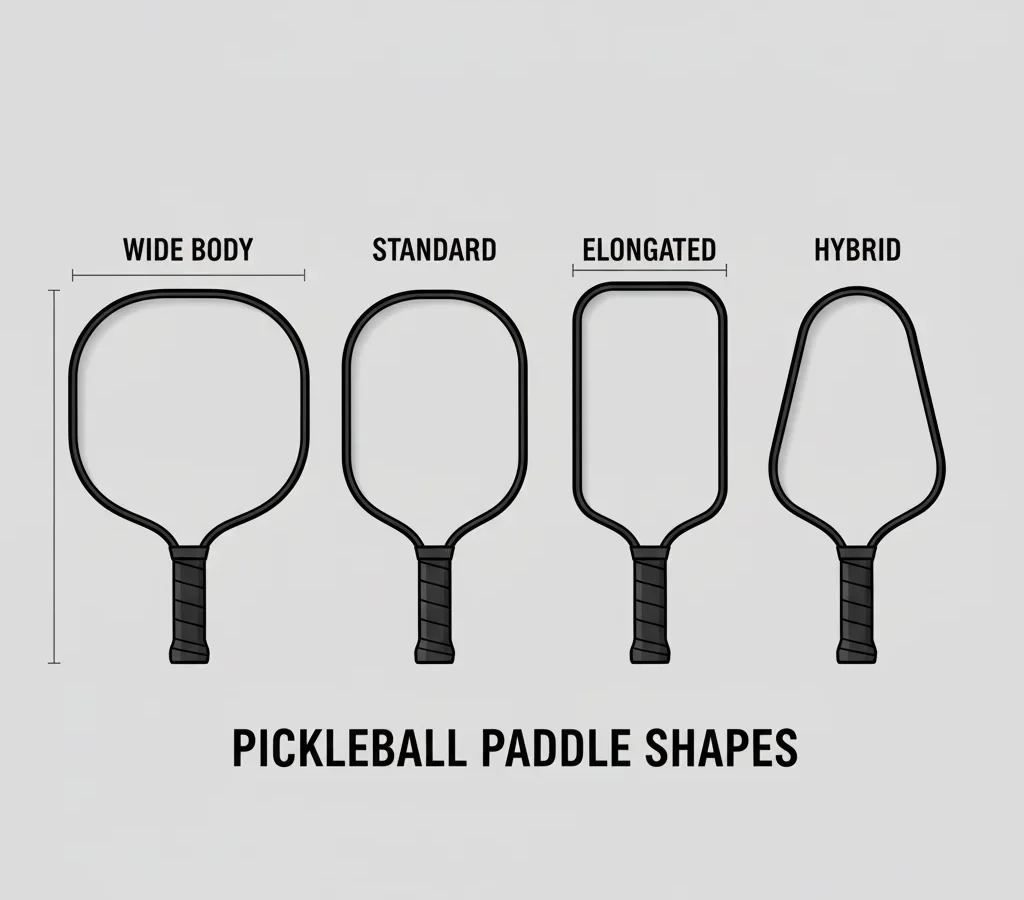
Wide Body Paddles (Forgiveness & Control)
Larger sweet spot, easier for consistent shots and beginners.
Elongated Paddles (Reach & Power)
Larger sweet spot, easier for consistent shots and beginners.
Pickleball Paddle Core Materials
The core affects feel, sound, and responsiveness.
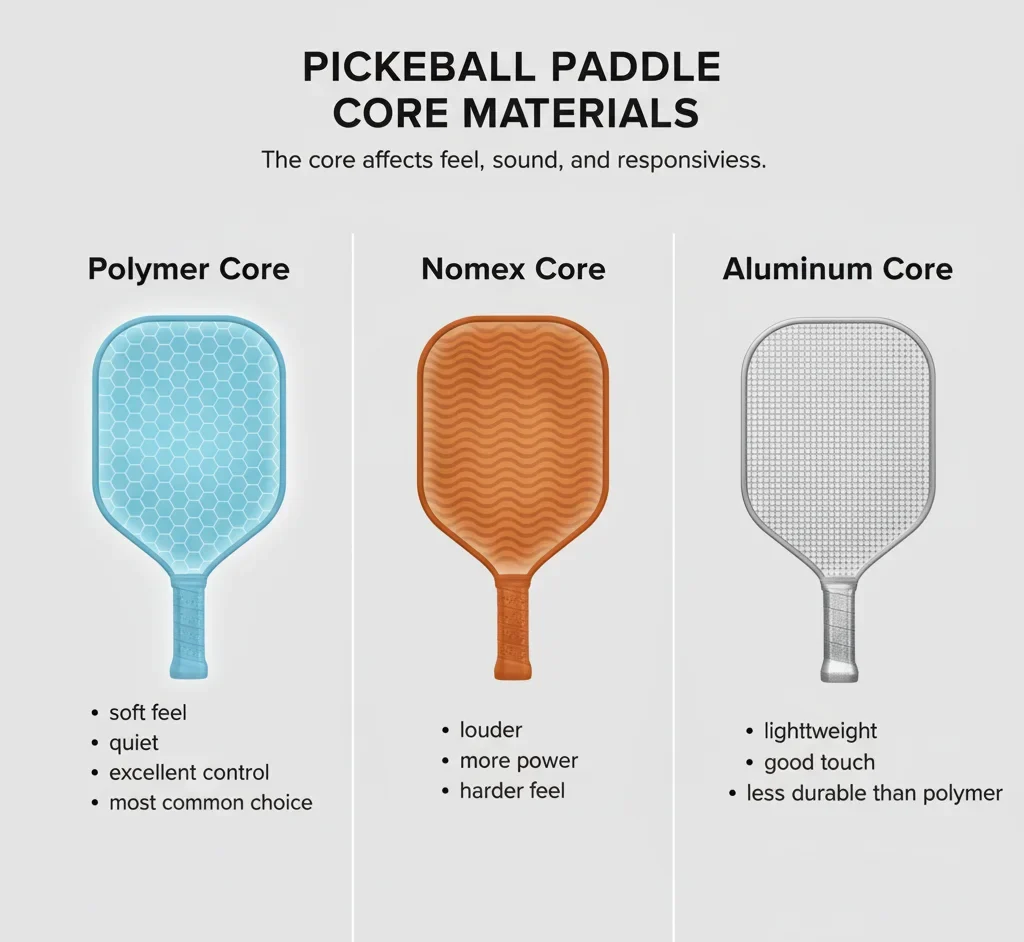
Polymer Core
- Soft feel
- Quiet
- Excellent control
- Most common choice
Nomex Core
- Louder
- More power
- Harder feel
Aluminum Core
- Lightweight
- Good touch
- Less durable than polymer
Grip Size and Comfort
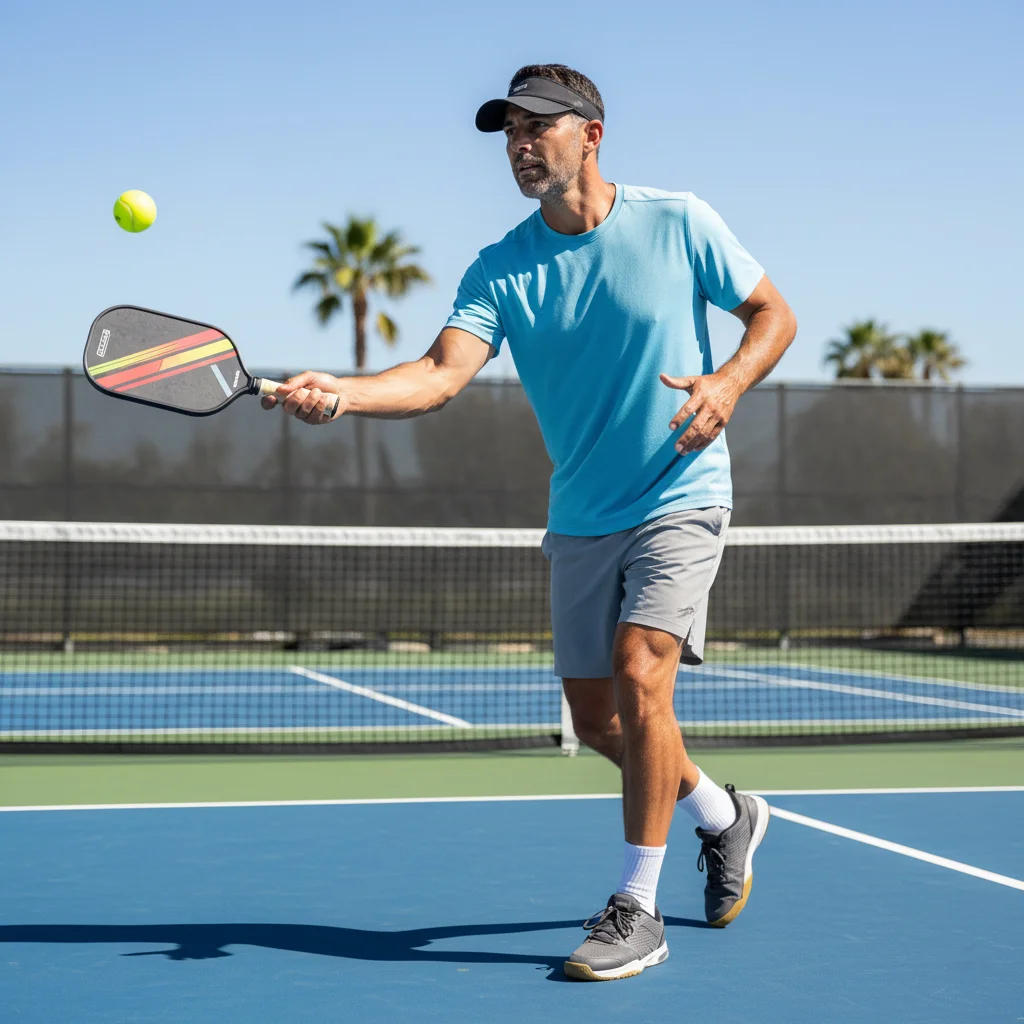
Choose a grip that feels secure but not tight; smaller grips help spin, larger grips reduce hand fatigue.
How to Choose the Right Pickleball Paddle
Ask yourself these questions:
- Are you a beginner, intermediate, or advanced player?
- Do you prefer power or control?
- Do you play mostly singles or doubles?
- Do you have tennis elbow or wrist issues?
Your answers will help narrow down the best paddle type for you.
- Best pickleball paddles for beginners
- Best pickleball paddles for control
- Best pickleball paddles for power
- Best pickleball paddles for spin
- Lightweight pickleball paddles for seniors
- Pickleball paddles for tennis elbow
Frequently Asked Questions About Pickleball Paddles
What pickleball paddle is best for beginners?
Most beginners do best with a midweight paddle (around 7.5–8.2 oz). It gives a good balance of control and power without feeling too heavy. Composite or graphite paddles are popular because they are forgiving and easier to handle than wooden paddles.
What weight pickleball paddle should I use?
It depends on your play style:
- Lightweight paddles (under 7.5 oz) are great for control, quick reactions, and players with arm or wrist issues.
- Midweight paddles (7.5–8.2 oz) work for most players and are the safest choice if you are unsure.
- Heavy paddles (8.3 oz and up) deliver more power but can cause fatigue if you play long sessions.
Most recreational US players choose midweight paddles.
Are expensive pickleball paddles worth it?
Not always. Higher-priced paddles usually offer better materials, improved spin, and more consistent performance. But if you are a casual or beginner player, you can play great pickleball with a paddle under $100. Expensive paddles make more sense once you play regularly or compete.
What grip size should I choose for a pickleball paddle?
Grip size matters more than people think.
- Grip size matters more than people think.
- Larger grips feel more stable and reduce hand strain
Larger grips feel more stable and reduce hand strain
How long does a pickleball paddle last?
For recreational players, a paddle usually lasts 1 to 2 years. If you play several times a week or compete in leagues, you may notice performance drop sooner. Cracks, dead spots, or loss of spin are signs it’s time to replace your paddle.
What’s the difference between graphite and composite pickleball paddles?
- Graphite paddles are lightweight and offer excellent control and touch
- Composite paddles provide a softer feel and more power
Composite paddles provide a softer feel and more power
Can I use any pickleball paddle in tournaments?
No. Tournament play in the US requires paddles that meet USA Pickleball regulations. Most major brands are approved, but cheap or unbranded paddles may not be legal. Always check if a paddle is USA Pickleball approved before tournament play.
Do paddle shape and size really matter?
Yes.
- Elongated paddles give extra reach and power
- Wide-body paddles offer a larger sweet spot and are more forgiving
Beginners and casual players usually prefer wide-body paddles, while aggressive players often choose elongated designs.
What pickleball paddle is best for seniors?
Seniors typically prefer lightweight or midweight paddles with a soft feel. Paddles that reduce vibration and offer good control help prevent arm fatigue and joint discomfort during longer games.
How do I know when it’s time to replace my paddle?
You should consider replacing your paddle if:
- The surface feels slick and loses spin
- You notice cracks or edge damage
- Shots feel dead or inconsistent
If your game feels off even when your technique hasn’t changed, your paddle may be worn out.
Can a pickleball paddle improve my game?
A paddle won’t replace good technique, but the right paddle can absolutely help. Better control, improved comfort, and the right weight can make shots more consistent and reduce fatigue, especially during long matches.